

Hernia Surgery
Hernia:Types, Symptoms & Treatment
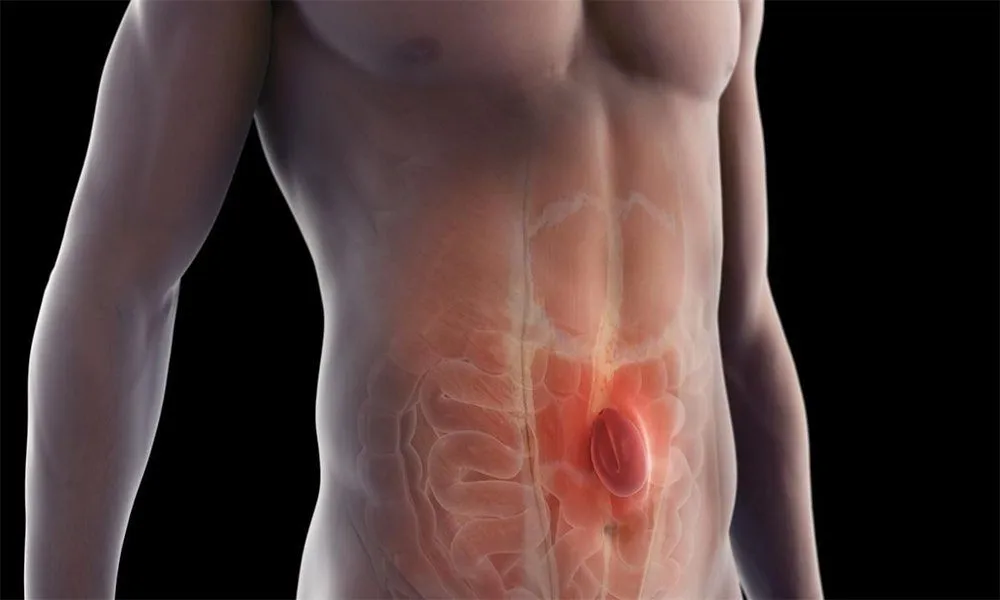
A hernia is the protrusion of an organ or the fascia of an organ through the wall of the cavity that normally contains it.[1][2] There are different kinds of hernia, each requiring a specific management or treatment.
By far the most common hernias develop in the abdomen, when a weakness in the abdominal wall evolves into a localized hole, or “defect”, through which adipose tissue, or abdominal organs covered with peritoneum, may protrude, including types such as inguinal hernia robotic surgery and ventral hernia robotic surgery. Another common hernia involves the spinal discs and causes sciatica. A hiatal hernia occurs when the stomach protrudes into the mediastinum through the esophageal opening in the diaphragm.
Hernias may or may not present with either pain at the site, a visible or palpable lump, or in some cases more vague symptoms resulting from pressure on an organ which has become “stuck” in the hernia, sometimes leading to organ dysfunction. Fatty tissue usually enters a hernia first, but it may be followed or accompanied by an organ. Consult the best hernia surgeon NJ for proper evaluation and treatment options.
Our Locations
Choose your preferred location
Frequently Asked Questions
How do I know if my hernia really needs surgery?
Honestly, most people don’t. A hernia sort of becomes part of your day — some days it barely bothers you, other days it gets annoying. If you notice the bulge more often or you feel that little pull or pressure doing simple things, that’s usually when people come in. A surgeon can tell you pretty quickly if it’s something that needs fixing or if you can keep an eye on it.
What signs tell me I shouldn’t wait?
If the hernia suddenly feels harder than usual, or it hurts in a way that’s new, or it just won’t go back in like it normally does… that’s when you stop waiting and get it checked. Those changes are your body’s way of saying, “Hey, this isn’t right.”
Are there different ways to repair a hernia?
Yeah, a few. Some people need a small cut, others qualify for the tiny-camera approach, and some do great with robotic surgery. You don’t have to figure out which one is “best.” After a short visit, the surgeon usually knows what makes the most sense for your hernia, not somebody else’s.
What does recovery really feel like?
Most people say, “Oh, that wasn’t as bad as I thought.” The first day is slow — you rest, you move carefully — but by the next day or so, you’re usually walking around fine. You just stay away from heavy lifting for a bit. Everything else slowly goes back to normal.
Can small habits actually help prevent another hernia?
They can, yes. Even simple things like not lifting in a rushed way, keeping your weight steady, or doing a few easy core-strengthening exercises here and there — they really do help. It doesn’t have to be some major lifestyle overhaul.
Why do people in New Jersey look for the best hernia surgeon NJ?
People in New Jersey have busy lives. Nobody wants a long recovery or a lot of back-and-forth. They want someone who really knows what they’re doing and can walk them through it without making the whole thing a big deal. That’s why you see people searching for the best hernia surgeon NJ — they want experience and peace of mind.
Contact with us!
If you have any questions, concerns, or comments regarding Anish Nihalani, MD, FACS, please fill out the short contact form below.